A Closer Look at Basketball Club Teams in San Diego
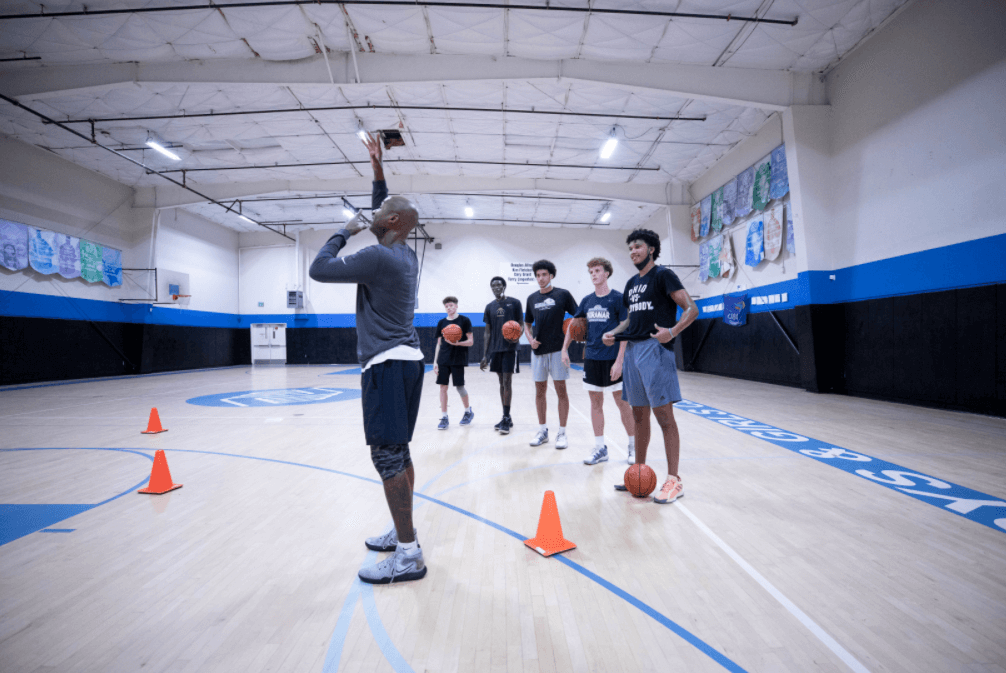
San Diego has never needed to imitate another city’s basketball culture. It has built its own version, shaped by year-round weather, sprawling neighborhoods, strong high school programs, military families, and a youth sports market that keeps expanding. For parents and players trying to make sense of that landscape, Basketball Club Teams San Diego is a phrase that can mean a lot of different things. It can mean elite travel ball with weekend flights and a packed tournament calendar. It can mean a neighborhood-based developmental team that practices twice a week and focuses on skill work. It can mean a middle school player searching for better competition, or a high school athlete trying to find the right exposure without burning out before July.
That range is part of what makes San Diego’s club scene both promising and confusing. There are talented coaches doing excellent work. There are also programs that market themselves aggressively without much substance behind the logo. Families often see polished social media pages, matching backpacks, and claims about exposure, then assume they are looking at quality. In practice, the strongest club experiences usually come down to something less flashy: coaching fit, roster composition, player role, tournament level, and whether the program actually helps an athlete improve over time.
The local basketball map matters too. A player in North County may have a different set of realistic options than a family in Chula Vista, La Mesa, or Mira Mesa. Traffic alone changes the equation. So does school workload. So does age. A ten-year-old who loves the game needs something very different from a varsity guard who is trying to sharpen decision-making against longer, faster defenders. Lumping all club basketball into one category misses the point.
What club basketball really means in San Diego
At its best, club basketball fills the gap between recreation leagues and school basketball. It gives players more reps, stronger competition, and a chance to develop in a setting where skill improvement is taken seriously. In San Diego, that often means spring and summer teams, though some programs operate nearly year-round. Practices might happen in school gyms, church gyms, community centers, or rented private facilities. Tournament weekends may be local, regional, or out of state depending on the age group and the ambitions of the program.
The useful distinction is not simply club versus non-club. It is developmental versus transactional. A developmental club team teaches spacing, footwork, help-side principles, pace, shot selection, and role awareness. It gives players room to make mistakes and learn from them. A transactional club team talks more about branding than improvement. It may chase tournament entries, collect fees, and rely on one or two talented kids to carry games while everyone else gets scattered minutes.
San Diego has examples of both. That is true in every major youth basketball market, but it shows up sharply here because demand is high. Families are willing to invest in training, travel, and tournament fees. Whenever demand rises, quality varies.
Why families turn to club teams
For many players, school basketball alone is not enough. The season is short. Practice time can be limited. Team systems often focus on winning with the current roster rather than building each athlete’s long-term game. A club environment can offer more touches, more live reads, and more chances to play through mistakes.
I have seen younger players make huge jumps simply because they moved from one game a week to a structure where they practiced twice and played meaningful weekend games. A sixth grader who barely handled pressure in December can become a calm ball mover by late summer if she gets enough quality repetitions. The same applies to post players who need footwork, wings who need to learn to attack closeouts, and undersized guards who need to survive physically against older and more athletic defenders.
Parents also seek out Basketball Club Teams San Diego because they want their children around players who care. That matters more than many people realize. Ambition is contagious. When a player practices with teammates who sprint back on defense, communicate, and show up ready to work, habits change. Standards rise without a speech.
Exposure is another reason, though it tends to be overvalued at younger ages. For middle school players, the real value is development. College coaches are not making meaningful decisions based on a random seventh grade tournament. For high school players, especially during the key live periods and major showcase events, club basketball can matter more. Even then, the player still has to look like a college prospect when the whistle blows. Exposure without readiness is just attendance.
The San Diego advantage, and its built-in complications
San Diego offers one clear advantage for club basketball: the weather makes training and travel easier nearly all year. Families are not constantly battling snow, long winter shutdowns, or months of weather-related disruption. Outdoor work, conditioning, and flexible scheduling become easier. Players can stay active through every season.
There is also a broad basketball ecosystem. High school basketball in the county has pockets of real strength. Certain schools consistently produce disciplined, competitive teams. The presence of military families adds another dimension, bringing in athletes with different backgrounds and experiences. Add strong private trainers, established tournament operators within driving distance, and access Basketball Club Teams San Diego to Southern California’s broader basketball circuit, and you get a region where players can find real opportunities.
But San Diego’s geography creates friction. The county stretches. What looks manageable on a map can turn into an exhausting weeknight commute. A family in Oceanside or Carlsbad may spend significant time getting to central or south county practices. A player can love a team and still wear down over a long season because two-hour round trips become routine. The hidden cost of club basketball is not just money. It is time, energy, missed homework hours, and the emotional drag of a schedule that leaves little breathing room.
That is why local fit matters. A slightly less prestigious team with strong coaching and a sane commute can be a far better choice than a more famous program that turns every practice into a logistical battle.
Not every strong team is right for every player
Parents often ask the wrong first question. They ask, “What is the best club team?” The better question is, “What is the best situation for this player, right now?”
A team can be excellent and still be a poor fit. If a young point guard joins a roster that already has two dominant ball handlers and no developmental plan, he may spend the season standing in the corner. If a forward needs strength and confidence but lands with a win-now coach who pulls players after every mistake, she may leave the season more tentative than when she started. If a player is physically late developing, placing him on the toughest roster in the region may look ambitious but feel discouraging every weekend.
The right fit depends on age, maturity, current skill, and role. It also depends on what the player needs most. Some need structure. Some need freedom. Some need to be pushed harder. Some need clearer teaching. Some need to play up. Some need to dominate their own age level first.
This is where experienced parents and coaches tend to see things more clearly than first-time families. They understand that development is not linear. A player can be on a less glamorous team at twelve, make a leap at fourteen, and become a serious recruit later. The reverse also happens. Early dominance does not guarantee long-term progression. Club basketball rewards patience more than hype.
What good coaching looks like in a club setting
The strongest club coaches in San Diego usually stand out in quiet ways. Their teams warm up with purpose. The spacing in half-court sets makes sense. Players know when to cut, when to relocate, and how to defend basic actions. Timeouts are direct rather than theatrical. Players improve over the course of a season.
A good youth coach is not just a tactician. He or she is a translator. The coach can take concepts that matter at higher levels, weak-side tag responsibility, transition floor balance, read-based pick-and-roll decisions, and teach them in a way that fits the age group. That is harder than drawing plays. Plenty of coaches know basketball. Fewer know how to build basketball understanding.
In club settings, one of the clearest signs of coaching quality is how the staff handles mistakes. Does the coach teach through them, or punish them immediately? Young players need accountability, but they also need repetition under pressure. If every turnover leads to instant bench time, players start avoiding difficult reads. Development stalls. On the other hand, a team without standards becomes sloppy and stagnant. The best coaches in the Basketball Club Teams San Diego scene strike that balance. They correct, demand, and still allow growth.
Another sign is whether the roster has roles that make sense. Every player does not need equal usage, but every player should know what the team needs from them. Rebound and rim-run. Defend on the ball. Move it quickly. Stretch the floor. Pressure the point of attack. Young athletes thrive when expectations are specific.
The cost question, and what families should really measure
Club basketball can get expensive fast. Team fees, uniforms, tournament charges, travel, hotels, meals, shoes, and extra training sessions add up. In San Diego, where the cost of living is already high, that matters. Some families can absorb it more easily than others, which creates a real access issue in the sport. Not every talented player has the same runway.
Still, price by itself does not tell you much. A lower-cost program can be disorganized and under-coached. A high-cost program can offer excellent training, strong competition, and committed staff. The key is value. What is the player actually receiving?
A family should look at how often the team practices, who is coaching those practices, how many players are on the roster, what tournaments the team enters, and whether the event level matches the group. Paying premium rates to enter weak tournaments is poor value. So is paying for a bloated roster where half the players barely see the court. By contrast, a well-run local team with disciplined practices and carefully chosen competition can provide tremendous value, even without a big national profile.
There is also a simple question that cuts through a lot of marketing: is the player getting better? If six months pass and ball handling, finishing, defensive positioning, pace, and confidence all look the same, the investment deserves a hard review.
Tournament culture, and what it teaches
Weekend tournaments are where the club experience becomes visible. In Southern California, and especially within reach of San Diego, there is no shortage of events. Some are well-organized and genuinely useful. Others are little more than long days in overheated gyms with uneven competition and rushed schedules.
For players, tournaments teach adaptation. Back-to-back games require energy management. Opponents vary wildly. One game may be physical and half-court heavy. The next may be open-floor and chaotic. Players learn how to warm up fast, respond after a poor performance, and compete when tired. Those are valuable lessons.
But tournament volume can become a trap. More games do not automatically mean more development. If a team plays five games in a weekend and barely practices during the week, flaws linger. Skill work gets replaced by survival. This is especially common in spring and summer, when some programs chase game counts as a selling point.
There is a better balance. Practice should drive performance, and tournaments should reveal what the team needs next. When that cycle works, players improve quickly. When it does not, weekends become repetitive. The same poor spacing, rushed shots, weak box-outs, and avoidable turnovers keep showing up because nobody has time to fix them.
The role of independent training
San Diego has a large market for individual skill training, and for club players that can be helpful if it aligns with team goals. A skilled trainer can sharpen footwork, tighten handle, clean up shooting mechanics, and build confidence in game-specific actions. Done well, it accelerates development.
Done poorly, it creates confusion. I have seen players work on highly stylized dribble combinations for months without improving their ability to beat a defender in two dribbles and make the right next community basketball teams San Diego pass. I have also seen players become so focused on personal scoring packages that they lose feel for team basketball. The best trainers understand context. They teach moves that transfer.
For club athletes, independent work should support the role they are trying to grow into. An undersized guard may need finishing craft, pull-up consistency, and better reads versus traps. A wing may need catch-and-go footwork, body control, and lateral quickness. A young post may need screening angles, touch with either hand, and defensive mobility. The details matter.
How parents can evaluate a program without getting sold
The smartest parents usually watch before they commit. They attend a practice if allowed. They sit through a full game, not just highlights. They notice whether coaches teach during dead balls, whether the bench stays engaged, and whether players appear to trust the staff.
They also ask grounded questions. How many players are on the roster? Who will coach every event? What is the plan if tournaments conflict with school demands? How are minutes generally handled? What is the expectation around attendance? Programs that answer plainly tend to be more reliable than programs that lean on vague promises.
One short checklist can help when comparing Basketball Club Teams San Diego options:
- Does the coaching staff clearly improve players over time?
- Is the roster size reasonable for real playing opportunities?
- Does the tournament schedule fit the team’s level and goals?
- Is the commute sustainable for the family’s weekly life?
- Would this environment keep the player motivated to work?
Those questions are more useful than asking how many social media followers a program has or how many matching accessories come with the fee package.
High school ambitions, recruiting, and reality
Once players reach high school, the stakes often feel different. Families start thinking about varsity roles, exposure events, and college pathways. Club basketball can absolutely help here, but realism is important.
College coaches recruit players, not teams. Being on a respected team can help with visibility, but it does not replace production, athletic tools, positional fit, and academic readiness. A player still has to defend, make shots, process the game quickly, and compete with consistency. If a club setting showcases those things, it is useful. If it buries the player at the end of a deep bench in the name of prestige, it may do very little.
There is also a difference between playing in front of coaches and being recruitable by them. Families sometimes conflate the two. A gym full of college staffs sounds impressive, but exposure only matters when a player belongs in that environment and has enough opportunity to show it.
The San Diego area gives players decent access to larger Southern California recruiting circuits, which is a real advantage. Still, the strongest long-term plan usually links club basketball to school basketball rather than treating them as separate worlds. High school coaches notice whether players return from spring and summer more skilled, more confident, and more disciplined. That often matters just as much as any single tournament performance.
What younger players need most
For elementary and middle school players, club basketball should feel demanding but still healthy. The priorities are fundamentals, decision-making, love of the game, and gradual exposure to stronger competition. Chasing elite status too early can distort development. Ten-year-olds do not need constant travel to prove they care. They need reps, feedback, and room to enjoy playing.
A second short checklist is useful here, because younger players are the ones most likely to be rushed into the wrong setup:
- Skill work should outweigh system complexity.
- Playing time should allow meaningful learning.
- Coaches should teach, not just direct traffic.
- Competition should challenge without crushing confidence.
- The schedule should leave room for rest and school.
When those basics are in place, young athletes tend to stay engaged longer and improve more steadily.
The bigger picture in San Diego
What stands out about club basketball in San Diego is not just the talent pool. It is the number of decisions families have to make before a season even starts. They have to judge fit, cost, coaching, travel, and ambition all at once. There is no perfect formula. A family with a highly motivated sophomore will evaluate options differently than a family with a promising but still developing sixth grader. Both can make sound choices if they stay focused on substance.
The healthiest way to view Basketball Club Teams San Diego is as a tool, not an identity. The right team can raise a player’s level, sharpen habits, and open doors. The wrong team can drain money, time, and confidence. Most outcomes are not decided by a logo. They are decided by how often a player is taught well, challenged appropriately, and placed in situations that build real basketball skill.
San Diego gives players a lot to work with. Good weather, access to competition, strong trainers, and a deep regional basketball network create real opportunity. But opportunity only becomes progress when adults make careful choices. That means looking past hype, being honest about a player’s current needs, and remembering that development is usually quieter than marketing. The players who benefit most from club basketball are rarely the ones chasing the loudest scene. They are the ones in the right gym, with the right coach, doing the right work for long enough to let it show.
Lamont Smith Basketball Academy
888 Clairemont Mesa Blvd Suite T-2, San Diego, CA 92123
(619) 639-8778
FAQ About Basketball Club Teams San Diego
How can a player join an LSBA club team?
Players are evaluated during practices so the coaching staff can recommend an appropriate team and development level. Families should contact the academy to confirm current openings and evaluation details.
Are club teams available for newer basketball players?
Yes. LSBA describes multiple levels, including a developmental option for newer players as well as more competitive teams for athletes with prior club experience.
What do LSBA club team practices emphasize?
Practices emphasize basketball fundamentals, team defense, structure, communication, and player development. The specific focus may vary according to the team and experience level.
Do all LSBA teams travel?
Travel expectations vary by level. Some teams focus on local competition, while advanced teams may participate in tournaments elsewhere in Southern California or beyond. Families should confirm the current schedule before enrolling.